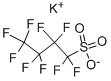
Potassium nonafluoro-1-butanesulfonate is a chemical compound that is used to remove trifluoroacetic acid from wastewater. It can also be used as an analytical reagent to measure cytosolic calcium concentrations in cells. In addition, it has been shown to have a high degree of chemical stability, but it may react with hydrogen fluoride and cause toxicity in humans.
Safety
Potassium nonafluoro-1-butanesulfonate can cause skin irritation, severe eye damage, and serious eye irritation. Additionally, it may cause respiratory irritation.
??? ??
White crystal
??
Potassium Perfluoro-1-butanesulfonate is standard for environmental testing and research. Also used on studies to compare the effect of glimepiride and nateglinde in all patients with type-2 diabetes.
Materials Uses
Fluorocarbon surfactant (potassium nonafluoro-1-butanesulfonate) was used to obtain the Nafion/fluorocarbon (N/FC) membranes[2].
Synthesis
Potassium nonafluoro-1-butanesulfonate is prepared by the reaction of Nonafluorobutanesulfonyl fluoride and potassium hydroxide.
Purification Methods
Wash it with H2O and dry it in vacuo. When the K salt is distilled with 100% H2SO4, it gives the free acid which can be distilled (b 105o/22mm, 210-212o/760mm) and then converted to the pure K salt. [Gramstad & Haszeldine J Chem Soc 2640 1957, Beilstein 2 IV 818.]