Both the acute oral LD50 value in rats and the acute dermal LD50 value in rabbits exceeded 5 g/kg(Wohl, 1974).
???? ??
KE-27444
????(GHS):
?? ?:
Warning
??·?? ??:
??
??·?? ??
?? ??
??
?? ?
?? ??
P- ??
H410
??? ??? ?? ????? ?? ???
?? ????? ?? - ??
?? 1
??
P273, P391, P501
??????:
P273
???? ???? ???.
P391
???? ????.
P501
...? ??? / ??? ?? ???.
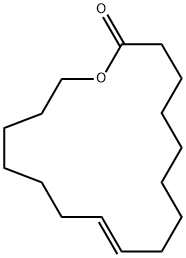
AMBRETTOLIDE C??? ??, ??, ??
??? ??
AMBRETTOLIDE is not reported as being found in nature, in contrast
to (Z)-7-hexadecen-16-olide, which occurs in ambrette seed oil
and which is also referred to as ambrettolide. It is a colorless to slightly yellow
liquid, d204 0.949–0.957, n20D 1.477–1.482, with an intense and powerful musk
odor. It is prepared by treating aleuritic acid (9,10,16-trihydroxyhexadecanoic
acid) with trimethyl orthoformate to give a dioxolane derivative. Reaction with
acetic anhydride yields -acetoxy (E)-9-hexadecenoic acid methyl ester. This is
lactonized with potassium hydroxide to give the title compound .
??
Found in oil of ambrette seed[Givaudan Index, 1961).
?? ??
From bromohexadecenoic acid(Bedoukian, 1967).
?? ??
Many patented methods are known, few are commercially feasible. From Bromo hexadecenoic acid, or from Dihydroxy palmitic acid, or from Aleuritic acid, or from Juniperic acid, etc.