|
ChemicalBook Optimization Suppliers |
|
| 化學(xué)名: | 2,3-プロパンジオール | | 英語化學(xué)名: | Propylene glycol | | 別名: | Sentry Propylene Glycol;Sirlene;Solar winter ban;Solargard P;solargardp;1,2-Propanediol,98+%;1,2-Propanediol,ACS,99.5%;1,2-Propanediol, 99+% | | CAS番號: | 57-55-6 | | 分子式: | C3H8O2 | | 分子量: | 76.09 | | EINECS: | 200-338-0 | | カテゴリ情報: | Medicine grade;INORGANIC & ORGANIC CHEMICALS;57-55-6 | | Mol File: | 57-55-6.mol | 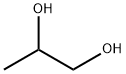 |
| 融點 | -60 °C (lit.) | | 沸點 | 187 °C (lit.) | | 比重(密度) | 1.036 g/mL at 25 °C (lit.) | | 蒸気密度 | 2.62 (vs air) | | 蒸気圧 | 0.08 mm Hg ( 20 °C) | | 屈折率 | n20/D 1.432(lit.) | | FEMA | 2940 | PROPYLENE GLYCOL | | 閃點 | 225 °F | | 貯蔵溫度 | Store at +5°C to +30°C. | | 溶解性 | Chloroform (Slightly), Ethyl Acetate (Slightly), Methanol (Slightly) | | 酸解離定數(shù)(Pka) | 14.49±0.20(Predicted) | | 外見 | Viscous Liquid | | 色 | APHA: ≤10 | | 比重 | 1.038 (20/20℃)1.036~1.040 | | PH | 6-8 (100g/l, H2O, 20℃) | | 臭い (Odor) | at 100.00 %. odorless very slight alcoholic | | においのタイプ | odorless | | 由來生物 | synthetic | | 旋光度(Optical Rotation) | -0.11° (C=1.00g/100ml, CHCL3) | | 爆発限界(explosive limit) | 2.4-17.4%(V) | | 水溶解度 | miscible | | 熱伝導(dǎo)率 | 0.199 W/(m·K) at 25 ℃ | | 比熱容量 | Cp(liquid): 2.51 J/(g·K), at 25℃ | | Sensitive | Hygroscopic | | Merck | 14,7855 | | JECFA Number | 925 | | BRN | 1340498 | | Henry's Law Constant | 2.7×10³ mol/(m3Pa) at 25℃, Burkholder et al. (2019) | | Dielectric constant | 32.0 | | 化粧品成分の機能 | HUMECTANT
SKIN CONDITIONING - HUMECTANT
SKIN CONDITIONING - MISCELLANEOUS
FRAGRANCE
SOLVENT
VISCOSITY CONTROLLING | | InChI | 1S/C3H8O2/c1-3(5)2-4/h3-5H,2H2,1H3 | | InChIKey | DNIAPMSPPWPWGF-UHFFFAOYSA-N | | SMILES | CC(O)CO | | LogP | -0.92 | | 表面張力 | 35.44mN/m at 298.15K | | CAS データベース | 57-55-6(CAS DataBase Reference) | | NISTの化學(xué)物質(zhì)情報 | Propylene glycol(57-55-6) | | EPAの化學(xué)物質(zhì)情報 | Propylene glycol (57-55-6) |
| Sフレーズ | 24/25 | | WGK Germany | 1 | | RTECS 番號 | TY2000000 | | 自然発火溫度 | 779 °F | | TSCA | TSCA listed | | HSコード | 29053200 | | ストレージクラス | 10 - Combustible liquids | | 有毒物質(zhì)データの | 57-55-6(Hazardous Substances Data) | | 毒性 | LD50 orally in Rabbit: 19400 - 36000 mg/kg LD50 dermal Rabbit 20800 mg/kg |
| | 2,3-プロパンジオール Usage And Synthesis |
| 外観 | 無色澄明の液體 | | 性質(zhì) | 1,2-プロパンジオールは�、プロパンの1位と3位の炭素にヒドロキシ基が結(jié)合した構(gòu)造です��。中央の炭素はキラル炭素となっているため�、鏡像異性體が存在します����。工業(yè)的には、主に酸化プロピレンの加水分解によって合成されてきました��。別の合成法として、1,2-ジクロロプロパンを炭酸水素ナトリウム水溶液で処理することによっても合成することができます�����。 | | 定義 | PGはプロピレングリコールの表示名稱である��。本品は����、次の化學(xué)式で表される二価アルコールである。 | | 溶解性 | 水, アルコール, エーテルに可溶�����。水及びエタノールに極めて溶けやすい���。 | | 解説 | プロピレングリコール化學(xué)式 CH3CHOHCH2OH ���。プロピレンクロロヒドリンを炭酸ナトリウムと水で処理して得られる無色粘稠な液體�����。沸點 188℃���。溶剤��,不凍液����,殺菌剤としても用いられる??伤軇垽浈荪辚ē攻匹霕渲卧悉耸工铯欤t(yī)薬として水性膏剤����,水に難溶の物質(zhì)の注射用溶剤に用いられる。
| | 無機性値/有機性値 | 200/60 | | 用途 | 食品加工剤(香料�����、色素の溶剤�����、保存剤�����、濕潤剤)����。 | | 用途 | 有機合成原料���、ポリエステル樹脂 | | 用途 | 合成樹脂、可塑剤��、界面活性剤��、溶剤�、保存剤、濕潤剤��。 | | 用途 | 繊維���,樹脂���,溶剤,界面活性剤���,不凍液���,食品加工���,醫(yī)薬品など多方面に用途がある���。 | | 応用 | プロピレングリコールは化學(xué)物質(zhì)で無色の粘り気のある液體です多くの工業(yè)製品や消費財に使用されておりその特性と安全性から非常に重要な役割を果たしていますこの記事ではプロピレングリコールの性質(zhì)製造方法そしてさまざまな用途について解説します | | 化粧品の成分用途 | 保濕.濕潤剤�、保水剤�、減粘剤、皮膚コンディショニング剤�、溶剤、香料 | | 効能 | 濕潤剤, 溶解剤, 懸濁剤 | | 商品名 | プロピレングリコール (丸石製薬); プロピレングリコール (日興製薬); プロピレングリコール (日興製薬) | | 使用上の注意 | 吸濕性あり�����。 | | 説明 | Propylene glycol is used as antifreeze in breweries and
diaries, in the manufacture of resins, as a solvent, and
as an emulsifier in food. It was present as an
occupational sensitizer in the color-film developer
Flexicolor. | | 化學(xué)的特性 | Propylene glycol has a slight, characteristic taste. It is practically odorless. It absorbs moisture when exposed to moist
air. | | 化學(xué)的特性 | Propylene glycol is a colorless, odorless,
syrupy liquid. | | 天然物の起源 | Reported found in several varieties of mushrooms, roasted sesame seed, oat groats, parmesan cheese, cocoa,
pecans and truffle. | | 使用 | Propylene Glycol is a humectant and flavor solvent that is a polyhy-
dric alcohol (polyol). it is a clear, viscous liquid with complete solu-
bility in water at 20°c and good oil solvency. it functions as a
humectant, as do glycerol and sorbitol, in maintaining the desired
moisture content and texture in foods such as shredded coconut
and icings. it functions as a solvent for flavors and colors that are
insoluble in water. it is also used in beverages and candy. | | 使用 | Used as a solvent. | | 使用 | Next to water, propylene glycol is the most common moisturecarrying vehicle used in cosmetic formulations. It has better skin permeation than glycerin, and it also gives a pleasant feel with less greasiness than glycerin. Propylene glycol is used as a humectant because it absorbs water from the air. It also serves as a solvent for anti-oxidants and preservatives. In addition, it has preservative properties against bacteria and fungi when used in concentrations of 16 percent or higher. There is a concern that propylene glycol is an irritant at high concentrations, though it appears to be quite safe at usage levels under 5 percent. | | 定義 | An alcohol in which the hydroxyl groups are attached to a carbon atom of a branched or straight-chain aliphatic hydrocarbon. | | 適応癥 | Propylene glycol solution (40% to 60%, v/vCH2CH[OH]CH2OH, propylene glycol)
applied to the skin under plastic occlusion hydrates the skin and causes desquamation
of scales. Propylene glycol, isotonic in 2% concentration, is a widely used vehicle
in dermatologic preparations. Hydroalcoholic gels containing propylene glycol or
other substances augment the keratolytic action of salicylic acid. Keralyt gel consists
of 6% salicylic acid, 19.4% alcohol, hydroxypropylcellulose, propylene glycol, and water and is an extremely effective keratolytic agent. Overnight occlusion is used
nightly until improvement is evident, at which time the frequency of therapy can
be decreased to every third night or once weekly. This therapy is well tolerated,
is usually nonirritating, and has been most successful in patients with X-linked
ichthyosis vulgaris. Burning and stinging may occur when applied to damaged skin.
Patients with other abnormalities of keratinization with hyperkeratosis, scaling, and
dryness may also benefit. | | 調(diào)製方法 | Propylene glycol generally is synthesized commercially by
starting with propylene, converting to the chlorohydrin, and
hydrolyzing to propylene oxide, which is then hydrolyzed
to propylene glycol. It can also be prepared by other
methods. | | 製造方法 | Manufactured by treating propylene with chlorinated water to form the chlorohydrin, which is converted to the glycol by
treatment with sodium carbonate solution. It is also prepared by heating glycerol with sodium hydroxide. | | brand name | Sentry Propylene Glycol (Union Carbide); Sirlene (Dow Chemical). | | 安全性 | プロピレングリコールは一般に人體に対して低毒性であり食品や化粧品に幅広く使用されていることからもその安全性が伺えますただし大量に摂取すると健康に悪影響を及ぼす可能性があるため使用の際には適切な管理が必要です環(huán)境への影響としては生分解性があるため自然界で比較的分解しやすいですが大量に環(huán)境へ放出されると生態(tài)系に影響を與えることがあります | | 生合成 | Glycerol hydrogenolysis represents a promising route for the valorization of biodiesel-derived glycerol into propylene glycol. In a recent study, researchers prepared skeletal Cu catalysts derived from Cu-Zn dealloying. This catalyst provide an effective and sustainable platform for solvent-free glycerol hydrogenolysis[1].
 | | Aroma threshold values | Detection: 340 ppm | | 一般的な説明 | Thick odorless colorless liquid. Mixes with water. | | 空気と水の反応 | Water soluble. | | 反応プロフィール | 1,2-Propanediol is hygroscopic. 1,2-Propanediol is sensitive to excessive heat (tends to oxidize at high temperatures). 1,2-Propanediol can react with oxidizing materials. 1,2-Propanediol is incompatible with acid chlorides, acid anhydrides, chloroformates, and reducing agents. 1,2-Propanediol dissolves many essential oils. A mixture of 1,2-Propanediol with hydrofluoric acid and silver nitrate was put in a glass bottle which burst 30 minutes later. | | 危険性 | Toxic. | | 健康ハザード | Liquid may irritate eyes. | | 火災(zāi)危険 | 1,2-Propanediol is combustible. | | 生産方法 | プロピレングリコールは主にプロピレンオキシドの水素添加によって製造されますこの化學(xué)反応は高溫と高圧の環(huán)境下で行われ生成物としてプロピレングリコールのほかに副産物として水が生じます高純度のプロピレングリコールを得るためには精製過程が不可欠です | | 法規(guī)情報 | プロパンジオールは燃えやすく�、消防法において危険物第4類、第3石油類に分類されています����。引火點は99℃なので常溫で引火することはないですが、火気の近くでの取扱は厳禁です���。
參考文獻
| | 使用用途 | 水よりも低い融點�、高い沸點を生かして�����、溶剤や不凍液、熱媒や冷媒として利用されています�����。また�、生物への毒性が低いことを利用して保濕剤、���、防カビ剤などの食品添加物としても利用されます�。
醫(yī)薬品としては�、駐車剤や內(nèi)服薬、外用薬の溶解補助剤として調(diào)剤に用いられることがあります�。工業(yè)的には、樹脂を合成する際の中間原料としても用いられてきました�。また、有機化學(xué)においては��、ピナコール転移を利用したケトンの合成に用いられます���。
| | 応用例(製薬) | Choline chloride: propylene glycol (1:4 molar ratio) was selected as the optimal deep eutectic solvents (DES) due to its viscosity, pH, organoleptic properties, and the highest curcumin solubility (11.90 ± 0.15 mg/mL). While DES increased curcumin solubility, buccal films were successfully obtained. This curcumin-loaded buccal films successfully demonstrated the acceptable formulation properties and screening-level in vitro biological activities[2]. | | 接觸アレルゲン | Propylene glycol is used as a solvent, a vehicle for
topical medicaments such as corticosteroids or aciclovir,
an emulsifier and humectant in food and cosmetics,
and as antifreeze in breweries, in the manufactures
of resins. It was present as an occupational sensitizer
in the color film developer Flexicolor. Patch tests in
aqua are sometimes irritant. | | 安全性プロファイル | Slightly toxic by
ingestion, skin contact, intraperitoneal,
intravenous, subcutaneous, and
intramuscular routes. Human systemic
effects by ingestion: general anesthesia,
convulsions, changes in surface EEG.
Experimental teratogenic and reproductive
effects. An eye and human skin irritant.
Mutation data reported. Combustible liquid
when exposed to heat or flame; can react
with oxidizing materials. Explosive in the
form of vapor when exposed to heat or
flame. May react with hydrofluoric acid +
nitric acid + silver nitrate to form the
explosive silver fulminate. To fight fire, use
alcohol foam. When heated to
decomposition it emits acrid smoke and
irritating fumes. | | 職業(yè)ばく露 | Propylene glycol is used as a solvent;
emulsifying agent; food and feed additive; flavor, in manu-
facture of plastics; as a plasticizer, surface-active agent;
antifreeze, solvent, disinfectant, hydroscopic agent; coolant
in refrigeration systems; pharmaceutical, brake fluid; and
many others. | | 発がん性 | Dewhurst et al. and
Baldwin et al. in studies on the carcinogenicity of
other chemicals used propylene glycol as the solvent. As a
result they tested propylene glycol alone for carcinogenic
activity in rats and mice. Dewhurst et al. used a single
injection of 0.2 mL, whereas Baldwin et al. gave rats
and mice three to five subcutaneous injections, amount not
specified. In neither case were tumors observed during a
period of about a year or 2 years .
Wallenious and Lecholm applied propylene glycol
to the skin of rats three times a week for 14 months but found
no tumor formation. Stenback and Shubik confirmed
these findings when they applied propylene glycol at undiluted
strength and as a 50 and 10% solution in acetone to the
skin of mice during their lifetimes.
No tumors have been reported in the lifetime dietary
feeding studies . In fact, Gaunt et al.
specifically state that no tumors were found in the rats. | | 環(huán)境運命予測 | Propylene glycol can be released into the environment via
industrial releases or by disposal of consumer products.
Propylene glycol is readily soluble in water and has a low
sorption partition coefficient (KOC), so has the ability to move
through soil and to leach into ground water. Because of low
vapor pressure (0.1 mmHg at 25°�C) and high water solubility,
there is minimal volatilization to the atmosphere from
surface water releases as well as substantial removal of its
vapors by wet deposition. Its low octanol/water partition
coefficient (KOW) indicates that bioconcentration and biomagnification
should not happen. Propylene glycol is readily
degraded in surface water and soil, by chemical oxidation and
microbial digestion, with a short half-life (1–5 days) in
aerobic or anaerobic conditions. It is also rapidly degraded in
the atmosphere by photochemical oxidation, with a half-life
about 1 day. Although environmental releases can and do
occur (airports must monitor storm water runoff of deicing
solutions), human health effects are likely to be minor, at
least in comparison to effects from potential exposures in
clinical scenarios. | | 合成方法 | プロピレンオキシドの水和反応��、TeO2觸媒と臭化物イオンの存在下のプロピレンと酢酸とO2との反応による方法 | | 純化方法 | Dry the diol with Na2SO4, decant and distil it under reduced pressure. [Beilstein 1 IV 2468.] | | Toxicity evaluation | Propylene glycol has a low degree of toxicity in animals as well
as humans, such that very high doses are needed to elicit effects
in acute toxicity studies. The toxic effects of propylene glycol
appear to be similar in animals and in humans. Central
nervous system (CNS) depression, hematologic toxicity,
hyperosmolarity, metabolic acidosis, cardiovascular effects,
and renal toxicity encompass the main acute and subacute
syndromes for propylene glycol. Most of the effects of
propylene glycol can be ascribed to high concentrations of the
parent molecule or to the accumulation of D,L-lactate in the
blood. Due to its alcohol moiety, propylene glycol at very high
concentrations is the most likely reason for the CNS depression.
Also, because high concentrations of propylene glycol will
increase the osmolarity of the blood, the hyperosmotic effects
are likely due to the parent molecule. The cardiovascular and
renal effects may be a result of the hyperosmolarity in combination
with the metabolic acidosis. The acidosis itself results
from the accumulation of lactate (both D- and L-forms), which
has been well documented in both animals and humans. | | 不和合性 | Incompatible with oxidizers (chlorates,
nitrates, peroxides, permanganates, perchlorates, chlorine,
bromine, fluorine, etc.); contact may cause fires or explo-
sions. Keep away from alkaline materials, strong acids
(especially nitric acid), strong bases, permanganates,
dichromates; may cause a violent reaction. | | 廃棄物の処理 | Dissolve or mix the
material with a combustible solvent and burn in a chemical
incinerator equipped with an afterburner and scrubber.All federal, state, and local environmental regulations must
be observed. | | 參考文獻 |
[1] Hasakul, T., Srinophakun, P., Thanapimmetha, A., Lueangwattanapong, K.,
Chiarasumran, N., Srisakunchan, A., Rattanaphra, D., Kingkam, W., &
Saisriyoot, M. (2026). Solvent-free glycerol hydrogenolysis through
skeletal copper catalyst. Resources Chemicals and Materials, 100174. https://doi.org/10.1016/j.recm.2026.100174
[2] Sevim, M. Z. ü., Arpa, M. D., Kolci, K., Sipahi, H., & Okur, N. ü.
(2026). Development and evaluation of Curcumin-Loaded mucoadhesive
buccal films using green deep eutectic solvents via design of
experiments. Pharmaceutics, 18(2), 245. https://doi.org/10.3390/pharmaceutics18020245
|
|