


2-??? ???
|
|
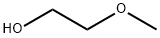
2-??? ??? ??
- ???
- -85 °C
- ?? ?
- 124-125 °C(lit.)
- ??
- 0.965 g/mL at 25 °C(lit.)
- ?? ??
- 2.62 (vs air)
- ???
- 6.17 mm Hg ( 20 °C)
- ???
- n
20/D 1.402(lit.)
- ???
- 115 °F
- ?? ??
- Store at +5°C to +30°C.
- ???
- Very soluble in acetone, dimethylsulfoxide, and 95% ethanol (quoted, Keith and Walters, 1992).
Miscible with N,N-dimethylformamide, ether, and glycerol (Windholz et al., 1983).
- ?? ?? (pKa)
- 15.7(at 25℃)
- ??? ??
- ??
- ??
- ??
- ??????(pH)
- 7 (20°C)
- ????
- 1
- pH ??
- 5- 7 at 25 °C
- ??
- ??? ???.
- ????
- 2.5-20%(V)
- ???
- ??
- ????
- 0.19 W/(m·K) at 50 ℃
- ??
- Cp(liquid): 2.25 J/(g·K), at 25℃
- ?? ??(λmax)
- λ: 213 nm Amax: 1.00
λ: 240 nm Amax: 0.20
λ: 260 nm Amax: 0.05
λ: 300-400 nm Amax: 0.01
- Merck
- 14,6038
- BRN
- 1731074
- Henry's Law Constant
- (x 10-2 atmm3/mol): 4.41, 3.63, 11.6, 3.09, and 3.813 at 10, 15, 20, 25, and 30 °C, respectively (EPICS, Ashworth et al., 1988)
- ?? ??
- ACGIH:TLV-TWA 0.1 ppm (0.3 mg/m3)
OSHA:PEL-TWA 25 ppm (80 mg/m3)
NIOSH:REL-TWA 0.1 ppm
- Dielectric constant
- 15.8(20℃)
- ???
- Stable, but contact with air may lead to the formation of explosive peroxides. A peroxide test should be carried out before this material is used if it has been exposed to air for some time, especially if it is to be purified by distillation. Contact with strong oxidizing agents may cause fire or explosion. Incompatible with strong bases, ac
- ??? ?? ??
- ??
?? ??
- ??? ?? ??
- 2-Methoxyethanol (109-86-4)
- InChI
- 1S/C3H8O2/c1-5-3-2-4/h4H,2-3H2,1H3
- InChIKey
- XNWFRZJHXBZDAG-UHFFFAOYSA-N
- SMILES
- COCCO
- LogP
- -0.77 at 20℃
- CAS ??????
- 109-86-4(CAS DataBase Reference)
??
- ?? ? ?? ??
- ?? ? ???? ?? (GHS)
| ??? ?? | T,F,C | ||
|---|---|---|---|
| ?? ???? ?? | 60-61-10-20/21/22-39/23/24/25-23/24/25-11-35-34-36/38 | ||
| ????? | 53-45-36/37-16-26-23-36/37/39 | ||
| OEB | C | ||
| OEL | TWA: 0.1 ppm (0.3 mg/m3) [skin] | ||
| ????(UN No.) | UN 1188 | ||
| WGK ?? | 3 | ||
| RTECS ?? | ZC0110000 | ||
| F ?????? | 10 | ||
| ?? ?? ?? | 548 °F | ||
| TSCA | TSCA listed | ||
| ?? ?? | 3 | ||
| ???? | III | ||
| HS ?? | 29332990 | ||
| ???? ??? | 3 - Flammable liquids | ||
| Hazard Classifications | Acute Tox. 4 Dermal Acute Tox. 4 Inhalation Acute Tox. 4 Oral Flam. Liq. 3 Repr. 1B STOT RE 2 STOT SE 1 |
||
| ?? ?? ??? | 109-86-4(Hazardous Substances Data) | ||
| ?? | LD50 in rats, guinea pigs (mg/kg): 2460, 950 orally (Smyth); LC50 (7 hr in air) in mice: 4.6 mg/l (Werner) | ||
| IDLA | 200 ppm | ||
| ???? ?? | KE-23272 | ||
| ?????? ??? | 2014-1-698 | ||
| ?????? ??? | ??1-60 | ||
| ?? ? ???? | ????: ????; ???(??)????: 2-?????? ? ?? 0.3% ?? ??? ??? |


2-??? ??? C??? ??, ??, ??
??
2-Methoxyethanol (2-ME), also known as ethylene glycol monomethyl ether, is a glycol ether that has been known since the 1920s, but its use significantly increased in the 1970s. Methoxyethanol is an E-series glycol ether derived from methanol and ethylene oxide. Other commonly used glycol ethers include ethoxyethanol, butoxyethanol, and methoxypropanol.??? ??
2-Methoxyethanol is a colorless liquid with a slight ethereal odor. The Odor Threshold is 0.9 2.3 ppm. It is miscible with water and with aliphatic and aromatic hydrocarbons. It is a solvent for essential oils, lignin, dammar, Elemi Essential Oil, ester gum, kauri, mastic, rosin, sandarac resin, shellac, Zanzibar, nitrocellulose, cellulose acetate, alcohol-soluble dyes, and many synthetic resins. Its solvency far cellulose esters are augmented when a ketone or halogenated hydrocarbon Is added.??? ??
Colorless liquid with a mild, ether-like odor. Experimentally determined detection and recognition odor threshold concentrations were <300 μg/m3 (<96 ppbv) and 700 μg/m3 (220 ppbv), respectively (Hellman and Small, 1974).??
2-Methoxyethanol is considered a non-comedogenic raw material. It is used as a solvent in nail products and as a stabilizer in cosmetic emulsions. It is able to penetrate the skin and may cause skin irritation.?? ??
From Methanol Plus Ethylene glycol, by heating under pressure.??
ChEBI: 2-methoxyethanol is a hydroxyether that is ethanol substituted by a methoxy group at position 2. It has a role as a protic solvent and a solvent.?? ??
A clear colorless liquid. Flash point of 110°F. Less dense than water. Vapors are heavier than air.??? ?? ??
Flammable. Water soluble.?? ???
2-Methoxyethanol is incompatible with oxygen and strong oxidizing agents. Contact with bases may result in decomposition. Incompatible with acid chlorides and acid anhydrides. . 2-Methoxyethanol forms explosive peroxides.???
Toxic by ingestion and inhalation. Moderate fire risk. Toxic by skin absorption. Questionable carcinogen.????
2-Methoxyethanol is a teratogen and a chronic inhalation toxicant. The target organs are blood, kidney,and the central nervous system. In addi tion to inhalation, the other routes of expo sure are absorption through the skin, and ingestion. Animal studies indicated that over-exposure to this compound produced anemia, hematuria, and damage to the testes.In humans, inhalation of EGME vapors cancause headache, drowsiness, weakness, irrita tion of the eyes, ataxia, and tremor. The acuteinhalation toxicity, however, is low and anytoxic effect may be felt at a concentration ofabout 25–30 ppm in airThe oral and dermal toxicities of thiscompound in test animals were found to belower than the inhalation toxicity. Ingestioncan produce an anesthetic effect and in alarge dosage can be fatal. An oral intake ofabout 200 mL may cause death to humans.
LC50 value (mice): 1480 ppm/7 h,
LD50 value (rabbits): 890 mg/kg
EGME is a teratogen exhibiting fetotoxi city, affecting the fertility and the litter size,and causing developmental abnormalities inthe urogenital and musculoskeletal systemsin test animals.
????
HIGHLY FLAMMABLE: Will be easily ignited by heat, sparks or flames. Vapors may form explosive mixtures with air. Vapors may travel to source of ignition and flash back. Most vapors are heavier than air. They will spread along ground and collect in low or confined areas (sewers, basements, tanks). Vapor explosion hazard indoors, outdoors or in sewers. Runoff to sewer may create fire or explosion hazard. Containers may explode when heated. Many liquids are lighter than water.Safety Profile
2-Methoxyethanol is moderately toxic to humans if ingested. Moderately toxic experimentally by ingestion, inhalation, shin contact, intraperitoneal, and intravenous routes. Human systemic effects by inhalation: change in motor activity, tremors, and convulsions. Experimental teratogenic and reproductive effects. A skin and eye irritant. Mutation data reported. When used under conditions that do not require the application of heat, thts material probably presents little hazard to health. However, in the manufacture of fused collars which require pressing with a hot iron, cases have been reported showing disturbance of the hemopoietic system with or without neurologcal signs and symptoms. The blood picture may resemble that produced by exposure to benzene. Two cases reported had severe aplastic anemia with tremors and marked mental dullness. The persons affected had been exposed to vapors of methyl "Cellosolve," ethanol, methanol, ethyl acetate, and petroleum naphtha. flame. A moderate explosion hazard. Can react with oxidizing materials to form explosive peroxides. To fight fire, use alcohol foam, CO2, dry chemical. When heated to decomposition it emits acrid smoke and irritating fumes. See also GLYCOL ETHERS. Flammable liquid when exposed to heat or??? ??
2-Methoxyethanol is used as a jet fuel additive; solvent for protective coating; and in chemical synthesis. Ethylene glycol ethers are used as solvents for resins used in the electronics industry, lacquers, paints, varnishes, gum, perfume; dyes and inks; and as a constituent of painting pastes, cleaning compounds; liquid soaps; cosmetics, nitrocellulose, and hydraulic fluids.?? ??
If 2-Methoxyethanol gets into the eyes, remove anycontact lenses at once and irrigate immediately for at least15 min, occasionally lifting upper and lower lids. Seek medical attention immediately. If this chemical contacts theskin, remove contaminated clothing and wash immediatelywith soap and water. Seek medical attention immediately. Ifthis chemical has been inhaled, remove from exposure,begin rescue breathing (using universal precautions, including resuscitation mask) if breathing has stopped and CPR ifheart action has stopped. Transfer promptly to a medicalfacility. When this chemical has been swallowed, get medical attention. Give large quantities of water and inducevomiting. Do not make an unconscious person vomit.Medical observation is recommended for 24- 48 h afterbreathing overexposure, as pulmonary edema may bedelayed. As first aid for pulmonary edema, a doctor orauthorized paramedic may consider administering a corticosteroid spray.Carcinogenicity
There are no experimental carcinogenicity or cancer epidemiology data relating to this chemical , but some short-term test data are available and are summarized in the section on genetic and related cellular effects.????
Photolytic. Grosjean (1997) reported an atmospheric rate constant of 1.25 x 10⁻¹¹ cm3/moleculesec at 298 K for the reaction of methyl cellosolve and OH radicals. Based on an atmospheric OH concentration of 1.0 x 10⁶ molecule/cm3, the reported half-life of methyl cellosolve is 0.64 d (Grosjean, 1997).Chemical/Physical. At an influent concentration of 1,000 mg/L, treatment with GAC resulted in an effluent concentration of 342 mg/L. The adsorbability of the carbon used was 132 mg/g carbon (Guisti et al., 1974).
?? ??
UN1188 Ethylene glycol monomethyl ether, Hazard Class: 3; Labels: 3-Flammable liquidPurification Methods
Peroxides can be removed by refluxing with stannous chloride or by filtration under slight pressure through a column of activated alumina. 2-Methoxyethanol can be dried with K2CO3, CaSO4, MgSO4 or silica gel, then distilled from sodium. Aliphatic ketones (and water) can be removed by making the solvent 0.1% in 2,4-dinitrophenylhydrazine and allowing to stand overnight with silica gel before fractionally distilling. [Beilstein 1 IV 2375.]? ???
Vapors may form explosive mixture with air. Heat or oxidizers may cause the formation of unstable peroxides. Attacks many metals. Strong oxidizers may cause fire and explosions. Strong bases cause decomposition and the formation of toxic gas. Attacks some plastics, rubber and coatings. May accumulate static electrical charges, and may cause ignition of its vapors.??? ??
Concentrated waste containing no peroxides: discharge liquid at a controlled rate near a pilot flame. Concentrated waste containing peroxides: perforation of a container of the waste from a safe distance followed by open burning.2-??? ??? ?? ?? ? ???
???
Methanol solution
?????
???????
???????
????
???
n-???
???? ??
Propanoic acid, 3-hydroxy-, 3-methoxy-3-oxopropyl ester
?? ??
??(2-?????) ?????
???? ??? ???? ???
Nimodipine
O-(2-??????)???????
N-(2-METHOXYETHYL)METHYLAMINE
9-(3-(CIS-3 5-DIMETHYL-1-PIPERAZINYL)-
?????
TETRACHLOROCYCLOPROPENE
1,1-????-2-(2-??????)??
1-(2-Methoxyethyl)hydrazine
???????
??B-????????
?? 059 ????
2-????? ?????
Ambroxol
1,2-????????
2,4-Difluorophenylboronic acid
7-Chloro-1-cyclopropyl-6-fluoro-1,4-dihydro-8-methyl-4-oxoquinoline-3-carboxylic acid
1.4-?????
2-??? ??? ?? ??
???( 640)?? ??
| ??? | ?? | ??? | ?? | ?? ? | ?? |
|---|---|---|---|---|---|
| Yunjian (Guangzhou) Import Export Trade Co., Ltd | +86-13322801610 +86-15521457061 |
catherina@yunjianmaoyi.com | China | 248 | 58 |
| Hebei Chuanghai Biotechnology Co., Ltd | +86-15350571055 |
Sibel@chuanghaibio.com | China | 8737 | 58 |
| Hebei Chuanghai Biotechnology Co,.LTD | +86-86-13131129325 |
sales1@chuanghaibio.com | China | 5218 | 58 |
| Henan Tianfu Chemical Co.,Ltd. | +86-0371-55170693 +86-19937530512 |
info@tianfuchem.com | China | 21531 | 55 |
| career henan chemical co | +86-0371-86658258 |
sales@coreychem.com | China | 29766 | 58 |
| NINGBO INNO PHARMCHEM CO., LTD. | 13867897135 |
sales@nbinno.com | CHINA | 920 | 58 |
| SHANDONG ZHI SHANG CHEMICAL CO.LTD | 0531-68652808 18953170293 |
sales@sdzschem.com | China | 2921 | 58 |
| Xiamen AmoyChem Co., Ltd | +86-86-5926051114 |
sales@amoychem.com | China | 6361 | 58 |
| Shandong chuangyingchemical Co., Ltd. | 18853181302 |
sale@chuangyingchem.com | CHINA | 5898 | 58 |
| Shanghai Longyu Biotechnology Co., Ltd. | +8615821988213 |
info@longyupharma.com | China | 2411 | 58 |